
Flying machine
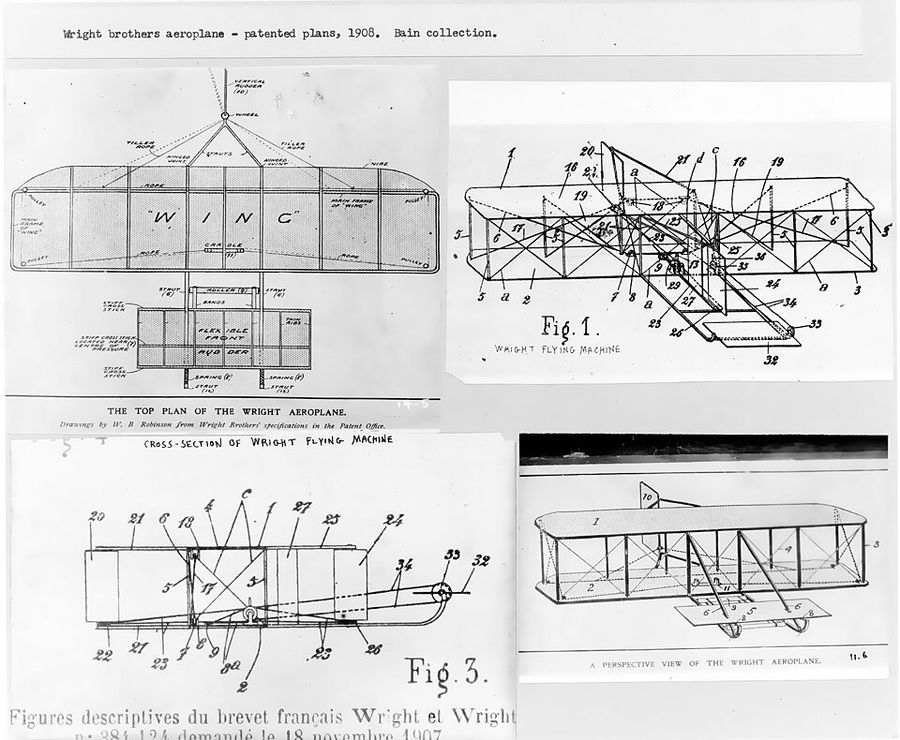
Patent drawings of a biplane with twisting wingtips, controlled by cables from the pilot's cradle.
Real, or AI slop?
The story
The Wright brothers applied for their “flying machine” patent in 1903, months before their first powered flight, and it was granted in 1906. It didn’t claim the airplane itself. It claimed a way of controlling one: wing warping, twisting the wingtips with cables so the plane could bank and turn without tipping over.
Control was the Wrights’ real breakthrough. Others had engines and wings; the Wrights had studied how birds balance and worked out how a pilot could stay in charge of a plane in three dimensions.
They then defended the patent fiercely, suing rival aviators, most famously Glenn Curtiss, whose ailerons did the same job differently. Many historians think the lawsuits slowed American aviation. During the First World War, the US government pushed the industry into a shared patent pool so planes could be built quickly.
Good to know
- Wing warping was soon replaced by ailerons, hinged flaps on the wings, which every airplane still uses.
- The Wrights tested their ideas on gliders at Kitty Hawk, North Carolina, chosen for its steady winds and soft sand.
- Their 1903 Flyer is on display at the Smithsonian’s National Air and Space Museum.
Background written with Claude (Opus 5.5) from public sources.