memo-latch by Felix Amsel
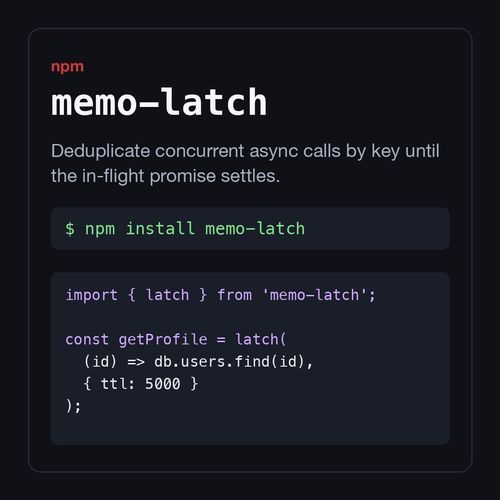
Merges identical async calls by key, so only one request is in flight until it settles. Felix Amsel, a backend developer in Leipzig, published it in 2020 after a cache stampede took down his company's API.
Enhance your web development projects with powerful JavaScript libraries designed to simplify coding and boost functionality. From UI components to data visualization and state management, these tools help you build faster, cleaner, and more interactive applications. Explore libraries that streamline your workflow and expand what's possible on the web.
Merges identical async calls by key, so only one request is in flight until it settles. Felix Amsel, a backend developer in Leipzig, published it in 2020 after a cache stampede took down his company's API.
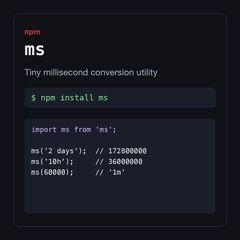
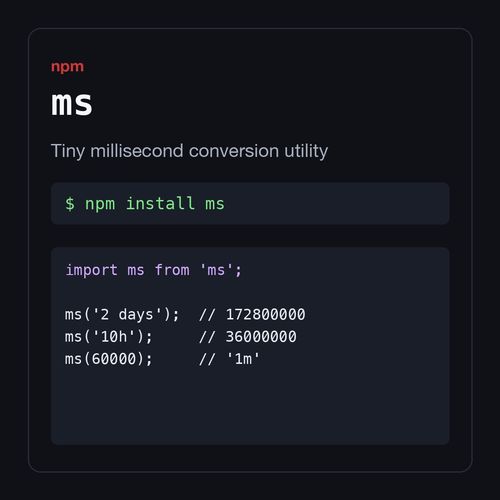
Converts times like '2 days' or '10h' into milliseconds, and back again. Guillermo Rauch, who later founded Vercel, published it in December 2011, and the company still maintains it.
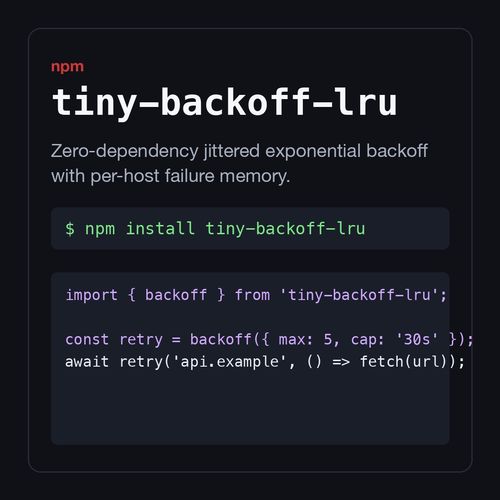
Zero-dependency jittered exponential backoff that remembers which hosts have been failing. Rafael Antunes Brito, a developer in São Paulo, published it in 2021 while building a payments gateway.
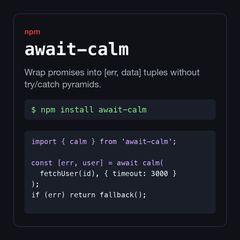
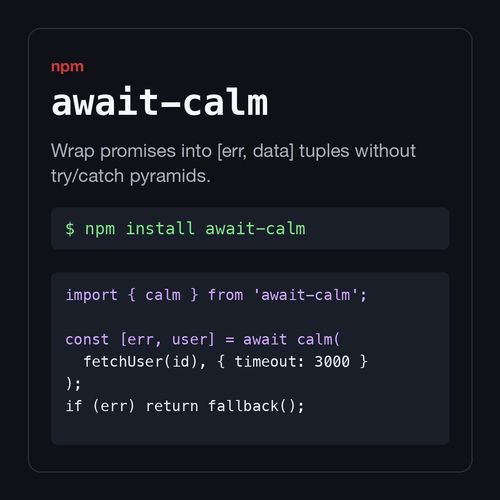
Wraps a promise so it returns an [err, data] pair instead of throwing, so you can skip the try/catch. Tallis Wren, a developer in Bristol, published it in 2019 after writing the same helper in five projects.
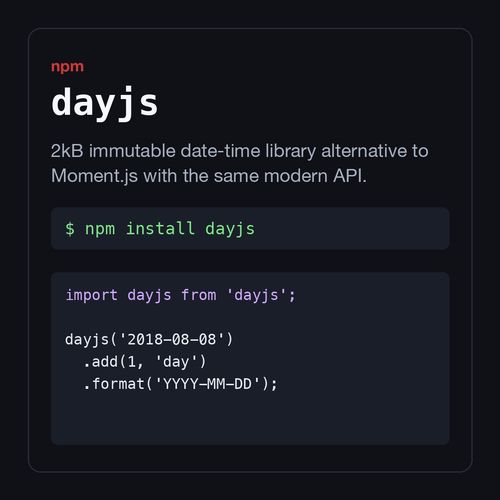
A tiny library for parsing, checking, changing and formatting dates and times, about 2 KB in size. A developer known as iamkun published it in April 2018, and it has since collected tens of thousands of stars on GitHub.
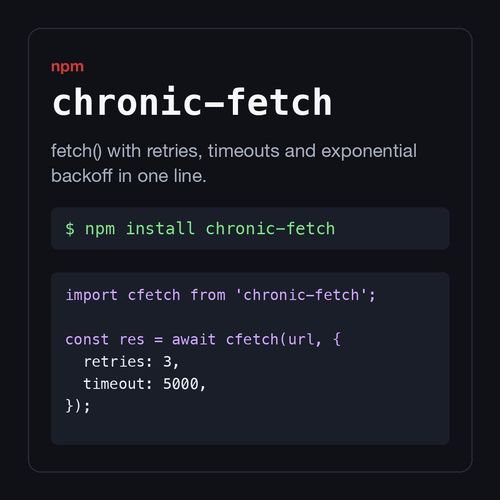
fetch() with retries, timeouts and exponential backoff in one line. Oskar Hjelmvik wrote it at a Gothenburg logistics company in 2020 and published it once the whole team was using it.
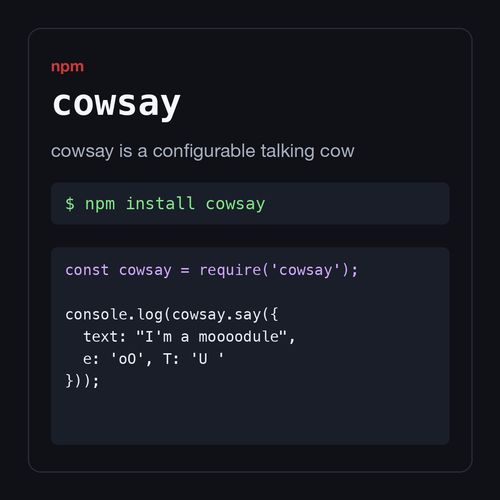
A configurable talking cow: give it a message and it prints an ASCII cow saying it in a speech bubble. Fabio Crisci published this Node.js version on npm in November 2012.
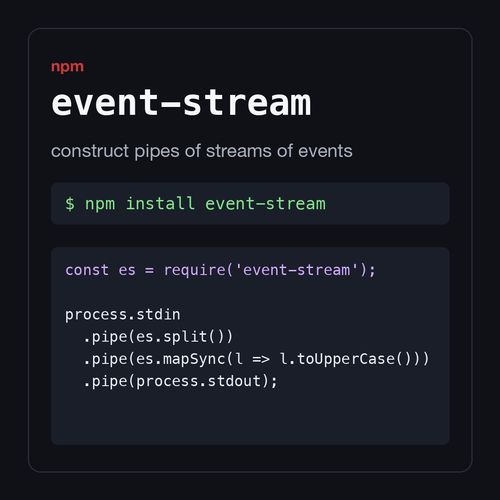
Tools for building pipelines of Node.js streams: map, split, join and merge streams of events. New Zealand programmer Dominic Tarr published it in August 2011, one of the many small modules he wrote.
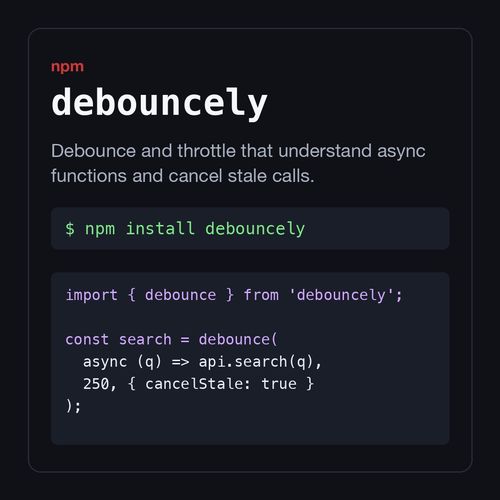
Debounce and throttle helpers that understand async functions and cancel out-of-date calls. Oslo developer Maren Østby published it in 2021, and a few UI kits now depend on it.
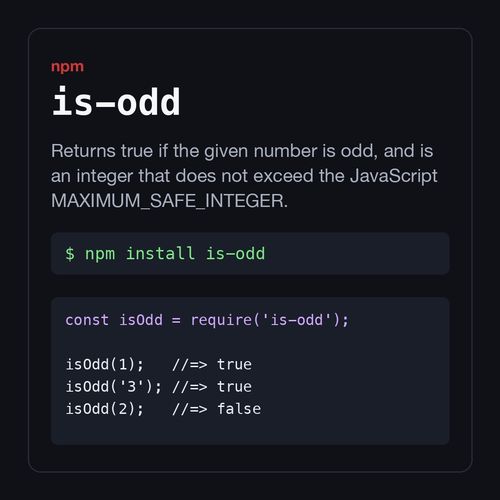
Returns true if a number is odd, and an integer no larger than JavaScript's maximum safe integer. Jon Schlinkert published it in February 2015, and it's still installed hundreds of thousands of times a week.
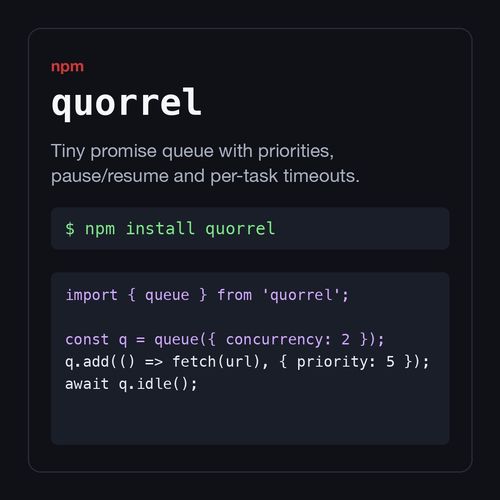
A tiny promise queue with priorities, pause and resume, and a timeout for each task. Niamh Corrigan, a developer in Dublin, published it in 2018; the odd name mixes 'queue' and 'quarrel'.
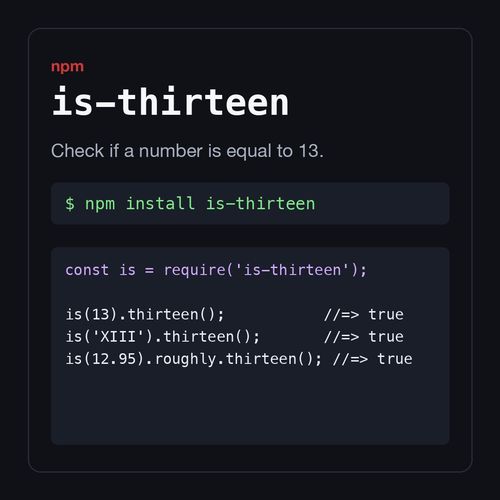
Checks whether a number is equal to 13, through a chainable API: is(13).thirteen(). Jezen Thomas published it on npm in March 2016, complete with a full test suite.
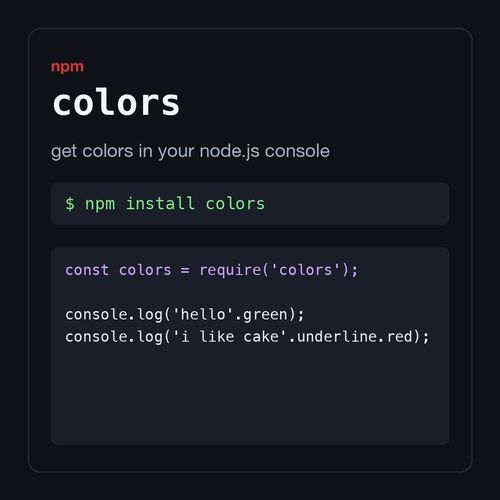
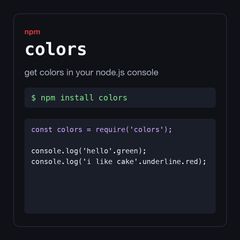
Get colours in your Node.js console: wrap a string and it prints red, bold or underlined. Marak Squires published it on npm in March 2011, and for years it was one of the most-installed packages there.
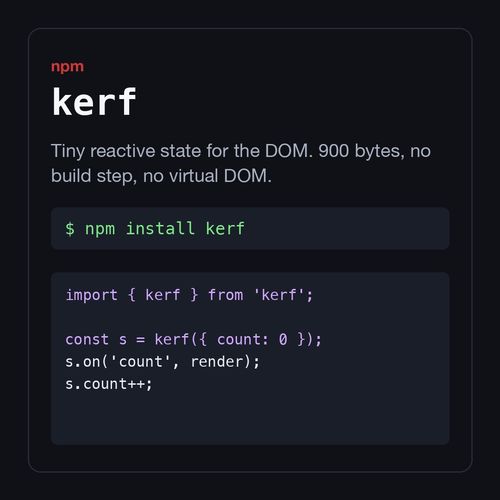
Tiny reactive state for the DOM in 900 bytes, with no build step and no virtual DOM. Ines Valadares, a front-end developer in Lisbon, released it in 2022 and named it after the width of a saw cut.
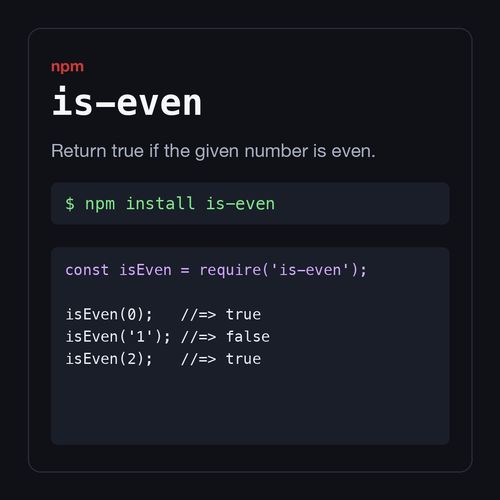
Returns true if the given number is even. Jon Schlinkert published it on npm in February 2015, one of hundreds of small packages he maintains.
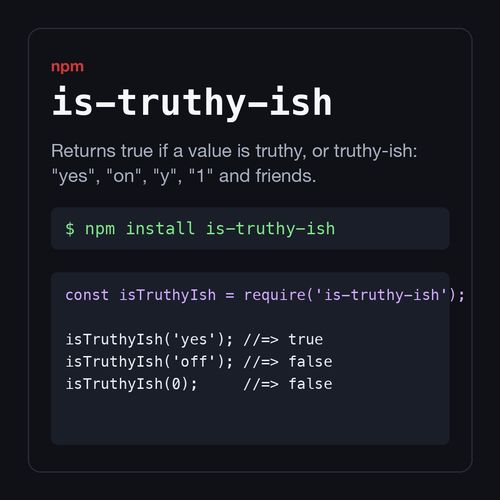
Returns true if a value is truthy, or truthy-ish: "yes", "on", "y", "1" and friends. Dario Ferrandi published it in 2017 to read config files where nobody agreed on how to write 'true'.
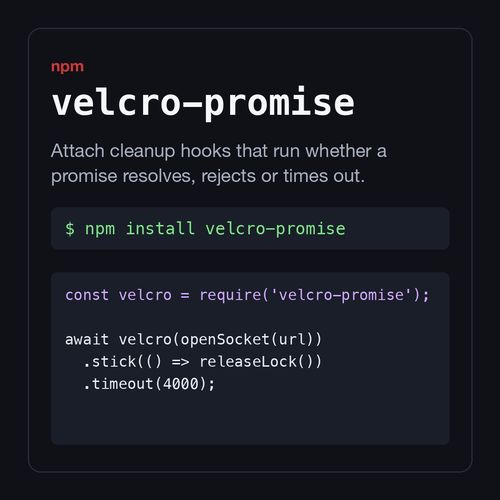
Attach clean-up hooks that run whether a promise resolves, rejects or times out. Henrik Sollie published it in 2016, and plenty of older projects still pull it in.
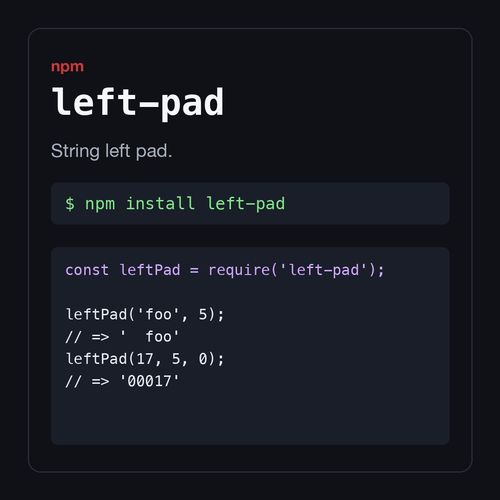
Pads the left side of a string with spaces or another character until it reaches a set length. Azer Koçulu published it on npm in March 2014, and the whole thing was eleven lines long.