
Star-nosed mole
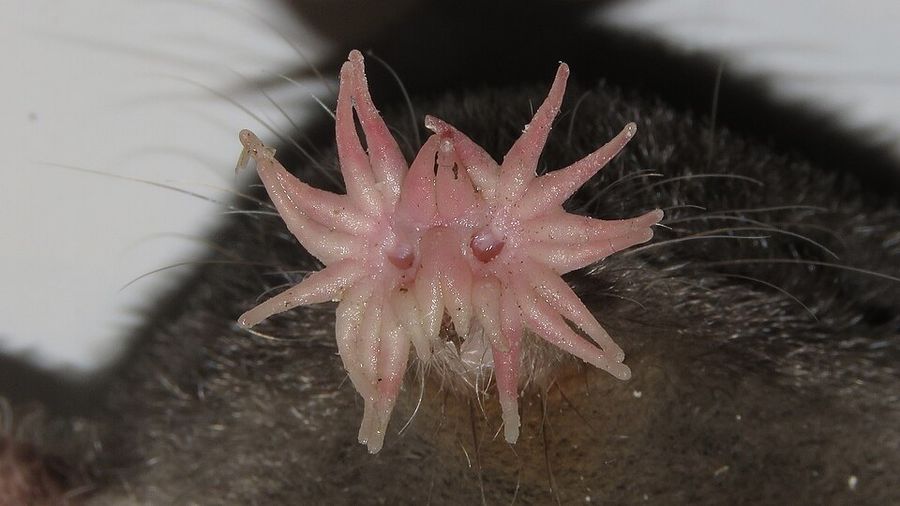
A small North American mole whose snout ends in a ring of 22 pink, fleshy tentacles.
Real, or AI slop?
The story
The star-nosed mole lives in wet ground and marshes in eastern Canada and the north-eastern United States. Its nose ends in 22 fleshy, pink rays that move constantly as it hunts, touching the ground many times a second.
The star is not for smelling. It’s a touch organ, covered in tens of thousands of tiny sensory structures called Eimer’s organs, and it is the most sensitive touch organ known in any mammal. With it, the mole can identify and swallow a small prey item in a fraction of a second, which makes it one of the fastest-eating animals ever measured.
It’s also a good swimmer, hunting underwater for insects and worms. Researchers found it can even “smell” underwater, by blowing out tiny bubbles onto objects and breathing them back in.
Good to know
- Much of what we know about the star comes from neuroscientist Kenneth Catania, who has studied the species for decades.
- The mole is nearly blind: it builds its picture of the world almost entirely by touch.
- A large part of its brain is devoted to processing signals from the star.
Background written with Claude (Opus 5.5) from public sources.