
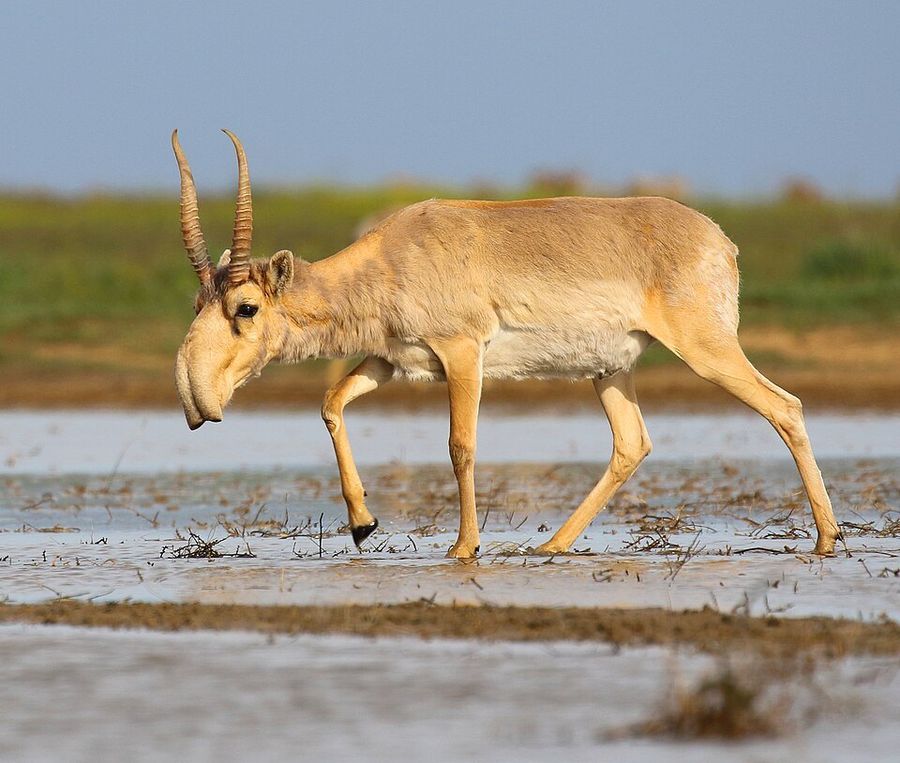
Saiga antelope
A steppe antelope with an oversized, drooping nose that hangs over its mouth.
Real, or AI slop?
The story
The saiga is a small antelope of the Central Asian steppe, best known for its large, flexible nose. It works like a filter: in summer it cleans dust from the air kicked up by the herds, and in winter it warms icy air before it reaches the lungs.
Saiga history is a series of crashes and comebacks. In the 1990s, poaching for males’ horns, used in traditional medicine, collapsed the population. In 2015 disaster struck again: around 200,000 saiga, a large share of the species, died within a few weeks after a usually harmless bacterium turned deadly, probably triggered by unusual heat and humidity.
Then conservation worked. Protection in Kazakhstan, where most saiga live, let the herds bounce back to well over a million animals, and in 2023 the species was moved out of the critically endangered category.
Good to know
- Saiga live in large herds that migrate across the open steppe.
- Their recovery is one of the biggest conservation success stories of recent years.
- The species survived the Ice Age, when it lived alongside woolly mammoths across Europe and Asia.
Background written with Claude (Opus 5.5) from public sources.