
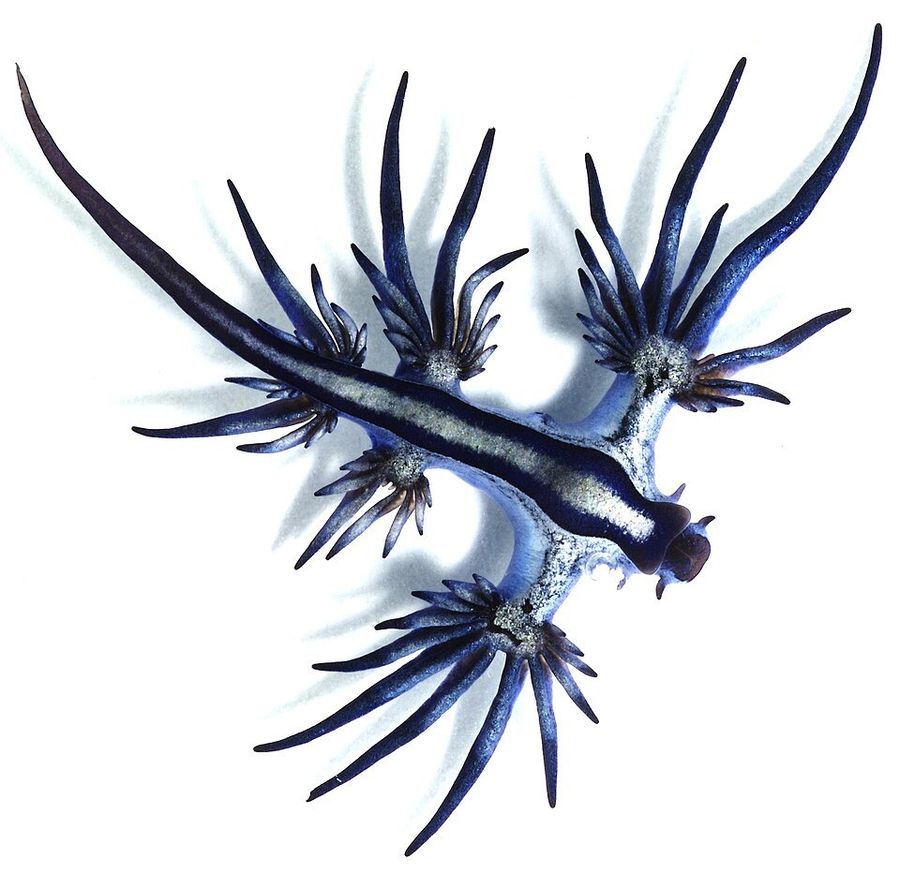
Blue dragon sea slug
A small blue-and-silver sea slug with feathery fingers, floating upside down on the ocean surface.
Real, or AI slop?
The story
Glaucus atlanticus, the blue dragon, is a sea slug only a few centimetres long. It lives in the open ocean, floating upside down on the surface thanks to an air bubble it keeps in its stomach.
Its colours are camouflage. The blue side faces up, blending with the sea for birds looking down, and the silvery-grey back faces down, blending with the bright surface for fish looking up. This trick is called countershading.
It eats some of the most venomous drifting animals in the sea, including the Portuguese man o’ war. It isn’t harmed by their stinging cells. Instead it collects them and stores them in the tips of its feathery “fingers”, so a blue dragon can sting harder than the animal it ate.
Good to know
- Blue dragons sometimes wash up on beaches in Australia and South Africa. They look beautiful, but you shouldn’t touch them.
- They drift with the wind and currents, together with the animals they feed on, a floating ecosystem called the neuston.
- Like many sea slugs, each blue dragon is both male and female.
Background written with Claude (Opus 5.5) from public sources.