Buste-Peer (Struwwelpeter) by Heinrich Hoffmann
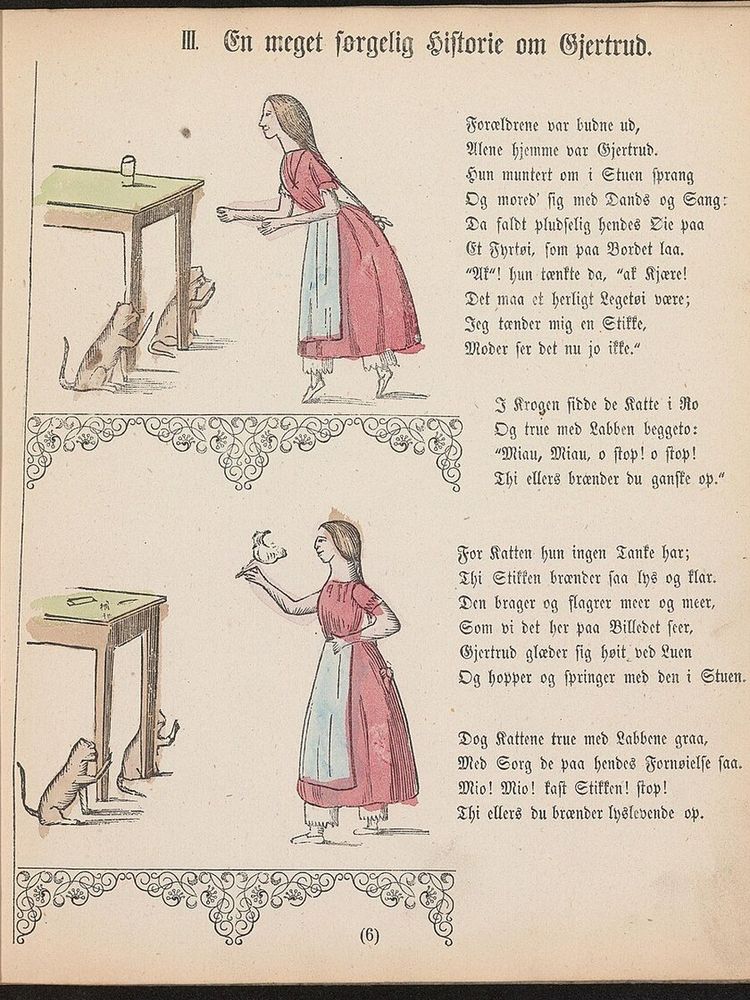
The Norwegian edition of Struwwelpeter, which a Frankfurt doctor wrote as a Christmas present for his three-year-old son and published in 1845. Its grim rhymes about children who misbehave have been translated into dozens of languages.
Real, or AI slop?
The story
Der Struwwelpeter was written and drawn by Heinrich Hoffmann, a doctor in Frankfurt. In 1844 he went looking for a Christmas picture book for his three-year-old son and found nothing he liked, so he made his own. Published in 1845, it became one of the most successful German children’s books ever, and this is its Norwegian edition.
The stories are short rhyming cautionary tales, and famously grim. Shock-headed Peter won’t cut his hair or nails. Pauline plays with matches and burns up. Little Conrad sucks his thumbs until a tailor snips them off with giant scissors. Augustus refuses his soup and wastes away.
Some readers see the book as terrifying, others as darkly funny and exaggerated on purpose. It has been endlessly parodied, including political versions mocking rulers and politicians.
Good to know
- Mark Twain translated it into English as Slovenly Peter, published after his death.
- Hoffmann worked as a doctor at a psychiatric hospital and was considered progressive for his time.
- The book’s illustrations are simple and bold, which made them easy for young children to read.
Background written with Claude (Opus 5.5) from public sources.