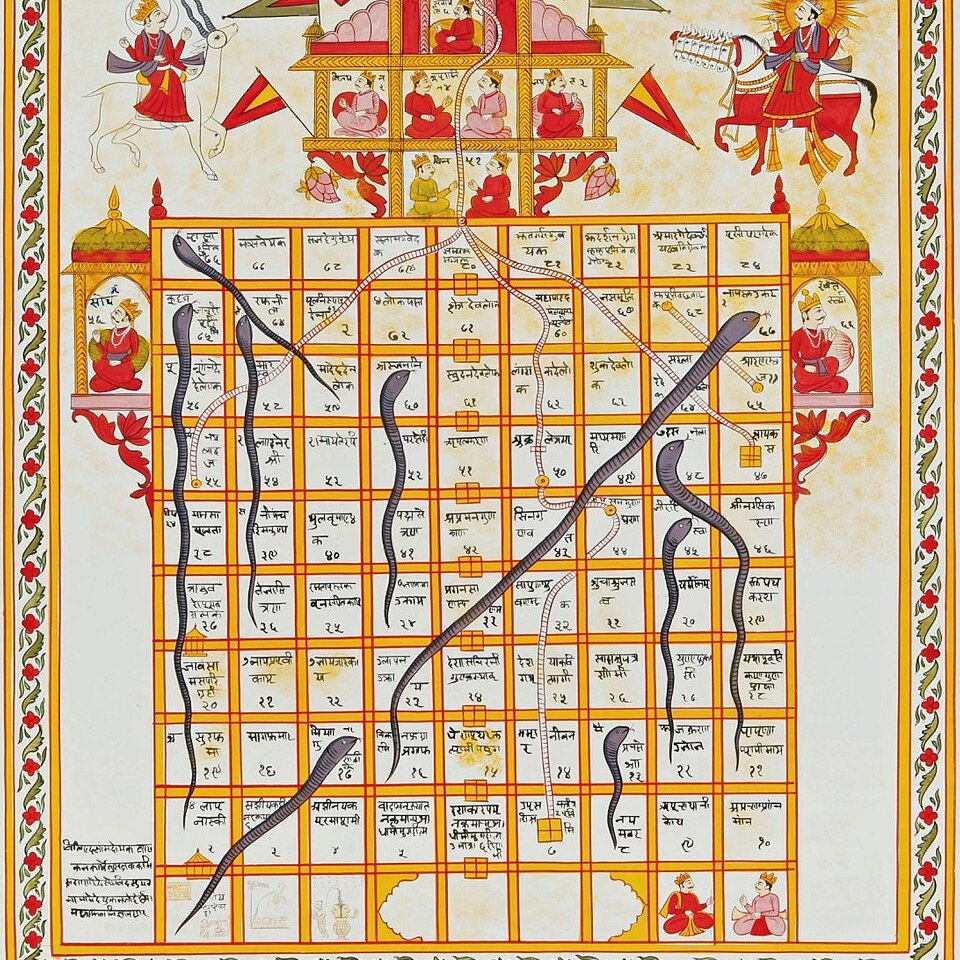
Gyan chaupar
The Indian 'game of knowledge', played on painted cloth boards for centuries before it became Snakes and Ladders. Ladders stood for virtues and snakes for vices, and reaching the temple at the top meant spiritual liberation. A British version appeared in the 1890s as a children's game.
Real, or AI slop?
The story
Snakes and Ladders began in India as gyan chaupar, the “game of knowledge”. This painted board comes from the Jain tradition, one of several religious versions alongside Hindu and Sufi ones.
The squares stand for stages of spiritual life. Ladders start on virtues, like generosity or faith, and lift you higher; snakes start on vices, like anger or pride, and drag you down. Reaching the top meant liberation from the cycle of rebirth. Because players move by the roll of dice, the game also taught that fate and karma both shape a life.
British families brought the game home in the 19th century and turned it into Snakes and Ladders, keeping the moral idea but simplifying it. In the US, Milton Bradley sold it from 1943 as Chutes and Ladders.
Good to know
- Early boards often had more snakes than ladders, suggesting the path to virtue was harder than the path to vice.
- Some boards have 72 squares, others 84 or 100.
- Old Indian boards are now collected by museums as works of art.
Background written with Claude (Opus 5.5) from public sources.